
Cousin (Venice, 1559)
Author of this page: Elena Lu, Harvard (2024)
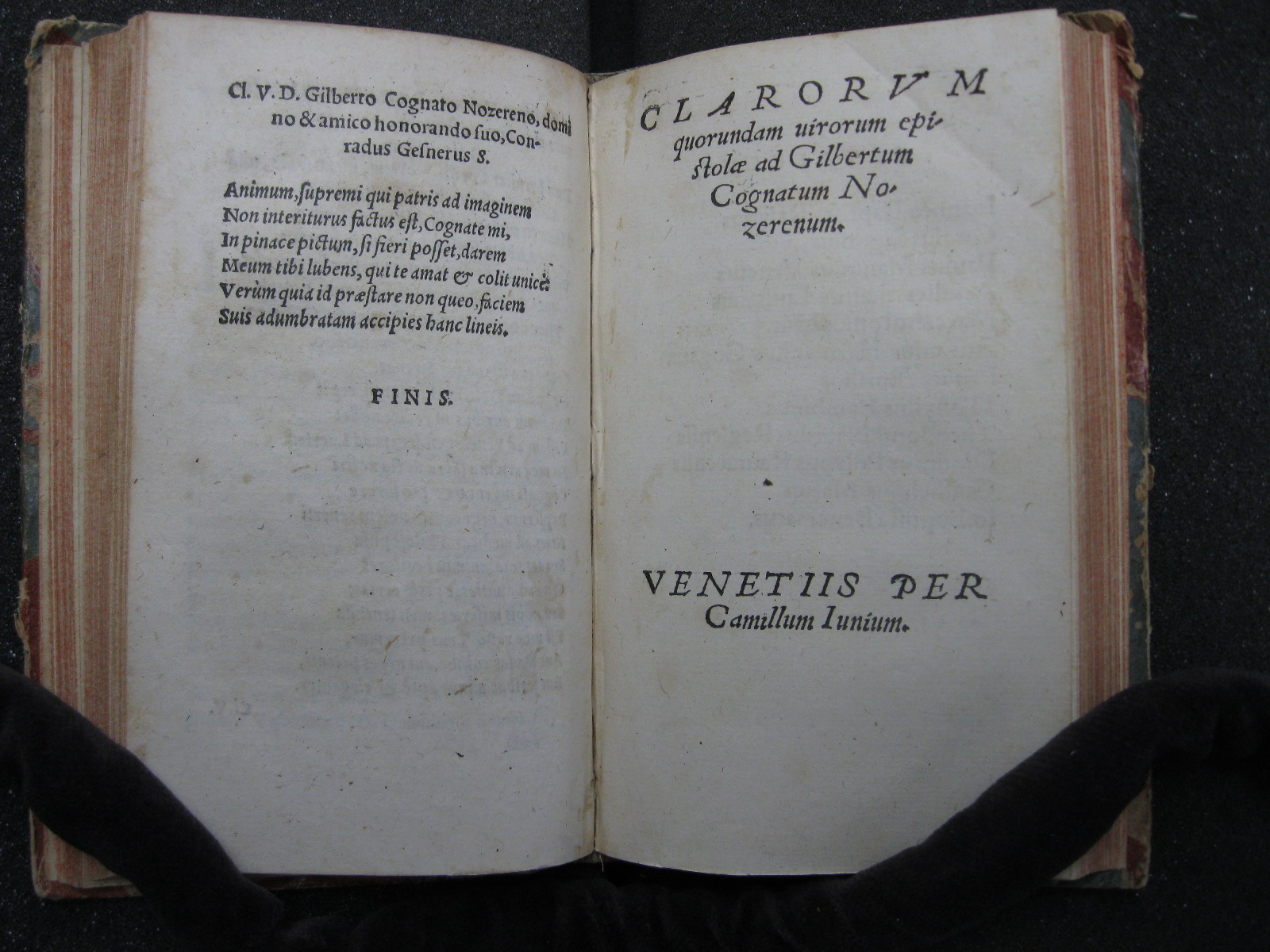
Translation:
To Gilbert Cognatus Nozerenus, to honor your master and friend, Conradus Gesnerus wrote:
My Cognatus, if it were possible to do, I would willingly give you my soul [animum][EL1] , which, etched on a tablet, has been made, permanent, to the likeness of the high father; [my soul] loves you and cares for you alone: but since I cannot vouch for it (lend it out?), may that you receive this image (these lines?) , shadowed though it is by its strings.
Transcription:
Cl. V. D. Gilberto Cognato Nozereno, domino et amico honorando suo, Conradus Gesnerus S.
Animum, supremi qui patris ad imaginem
Non interiturus factus est, Cognate mi,
In pinace pictum, si fieri posset, darem
Meum tibi lubens, qui te amat et colit unice :
Verum quia id praestare non queo, faciem
Suis adumbratam accipies hanc lineis.
[EL1]I’m unsure about what animus usually connotes in early modern Latin—whether it’s Platonic reason or the soul (opp. body). It’s likewise unclear to me what image he’s referring to.
Citation
Conrad Gessner, Poem, in Gilbert Cousin, Orationes duae de Christi nativitate et morte; Eiusdem carminum liber unus. Venice: Iunius, 1559, last page.
University library Basel, signature: Frey-Gryn D VII 95:3